Comparison · Published
Retractable screen door vs. security screen door
One disappears when you open it. The other locks when you do. They are not the same purchase.
The short answer: a retractable screen door is an insect screen that rolls into a housing on a spring, and a security screen door is woven 316 stainless mesh in a locking frame, published flat at $2,475 installed for a hinged door, $2,675 for a sliding door and $4,475 for a French pair from Daylight Steel. The retractable is for keeping bugs out of an open doorway and then getting out of the way. The security screen door is for leaving that doorway open and locked. Decide what you want the opening to do, and the product picks itself.
Retractables are the everyday Orange County answer for patio sliders and French doors, and a good one. Security screen doors get shopped for the same openings. So the two end up in the same search, the same conversation and sometimes the same quote folder, even though they share a doorway and almost nothing else. Here is the plain version.
What a retractable screen door is (and what it is for)
A retractable screen door is a length of light insect mesh wound on a spring-loaded roller inside a slim housing, mounted to one side of a door frame. Pull the handle bar across the opening and the mesh unrolls along top and bottom channels until it meets a magnetic or light catch on the far side. Let go, or lift the catch, and the spring winds it back into the housing. When the screen is retracted, the doorway is bare: no panel, no frame in the sight line, nothing to swing.
That is the whole appeal, and it is a real one. On a French pair the retractable keeps the doors looking like French doors. On a slider it replaces the aluminum insect screen that came with the house without adding a second panel to the track. The job is comfort: insects out, air in, screen gone the moment you do not want it. Its makers describe it as exactly that, and we take them at their word.
What a security screen door is (and what it is for)
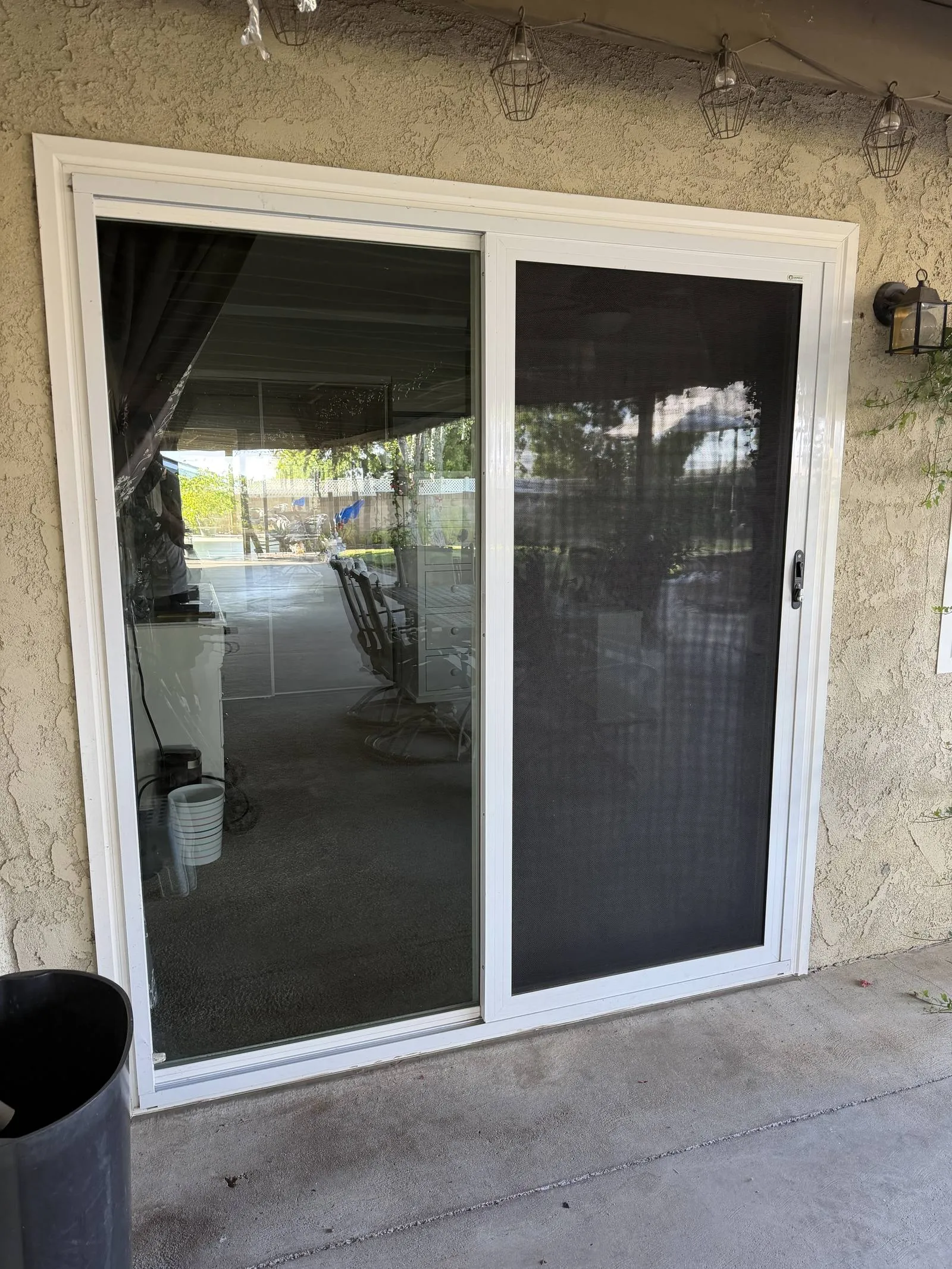
A security screen door looks like the screen door you grew up with and is built like nothing you grew up with. The screen is woven marine-grade 316 stainless steel, knife-shear tested to Australian standard AS 5041-2003, clamped into a rigid frame with a multi-point lock. It is a panel, not a roll: hinged for a single entry, sliding on its own track for a patio slider, or a matched pair for French doors. When it is open, it is still a door standing open. When it is closed and locked, the doorway is locked steel, and the entry door behind it can stand open all night.
The job is airflow plus security, in that order of daily use. The mesh works as a fine insect screen, flies and mosquitoes stay outside exactly as they would behind an ordinary screen door, and the forced-entry resistance is an added property rather than a trade-off. Every Daylight Steel door carries a 10-year manufacturer powder-coating color warranty on mesh and panels; 1 year on hardware. Our types of security screen doors guide walks the four openings and the three ways the category is built.
Side by side
| Retractable screen door | Security screen door | |
|---|---|---|
| Purpose | Insects out, air in, screen out of sight when not in use | Doorway open and locked; insects out, air in, forced-entry resistance |
| Mesh | Light insect screen on a spring roller | Woven 316 marine-grade stainless steel, clamped into the frame |
| How it opens | Pulls across the opening and rolls back into a housing | Swings on hinges, slides on its own track, or opens as a French pair |
| Disappears when open | Yes, into the housing | No, the panel stays in the opening, against the wall or beside the glass |
| Locks independently | Magnetic or light catch holds the mesh shut; not a lock | Yes: multi-point lock on hinged and French, independent stainless latch on sliding |
| Resists forced entry | No, and its makers do not claim otherwise | Yes: knife-shear tested to AS 5041-2003, frame fastened into the jamb |
| Pets and kids | Insect mesh on a spring; a dog or toddler can push through | Claws cannot cut or unravel woven 316; the locked door keeps a toddler on the right side |
| Wind | Light mesh on a catch; most owners roll it away on a gusty afternoon | Rigid frame; the wind passes through the mesh and moves nothing |
| Sight line when closed | Insect screen | Fine woven mesh reads as a light tint from a few feet away |
| Installed price | We do not quote the product class and publish no retractable figure; ask the retractable dealer for an installed number | $2,475 hinged, $2,675 sliding, $4,475 French pair, flat and published |
| Warranty | Per its maker | 10-year manufacturer powder-coating color warranty on mesh and panels; 1 year on hardware |
Where a retractable screen genuinely wins
The open sight line. Nothing else in the category makes a doorway this clean. Retracted, there is no panel anywhere, and on a French pair that means the doors you chose for their looks keep them. If the opening is a showpiece and security is not on the list for it, this is the right product and we will say so.
Openings a panel cannot serve. Some out-swing doors, some tight side entries and some porch configurations leave no room for a hinged screen to swing, and a retractable slips into places a panel will not go.
Price. A retractable is an insect screen, and it is priced as one. If insect control is the entire requirement, it is the right-sized spend, and we would rather tell you that than sell you a door for a job a screen can do.
Where a security screen door wins
The door can stay open. This is the whole product. A retractable keeps bugs out of an open doorway, but the doorway is still open, so the glass or the entry door has to close before anyone sleeps or leaves. A locked security screen door is the closed door, and the air keeps coming. That is why the open-door evening is our favorite product demo, and why the worth-it math is a different calculation from a screen door's.
Pets and kids. Cutting and unraveling is exactly how insect screen fails, and a retractable adds a spring and a catch to the same mesh. Woven 316 stainless does not cut, unravel or bow, which is why households with a large dog are the most common upgrade we see. Years of enthusiastic greetings may eventually scuff the powder coat at paw height, and that is cosmetic, not structural.
Wind. Orange County afternoons and the occasional Santa Ana push air through a doorway hard. A rigid frame fastened into the jamb does not notice; a roll of mesh on a catch does.
Coastal life. 316 is the marine-grade alloy, chosen for salt air. Our mesh guide covers why the grade decides how the door looks in year ten.
For a patio slider specifically
The slider is where this decision gets made most often, because the slider is where Southern California lives from June to October. A retractable replaces the aluminum bug screen with a roll that disappears, which is pleasant, and it leaves the opening exactly as unlocked as the glass behind it.
A sliding security door takes the other approach. It rides its own track beside your existing slider, usually in the channel where the old insect screen sits today, so the glass door is untouched. It runs on stainless rollers tuned to one-finger operation and locks with its own stainless latch, independent of the glass. The everyday use is the glass standing fully open all afternoon with the screen locked, and the mesh doing the insect job at the same time, so nobody has to remember to slide two things. Ours is $2,675 installed, flat, for a standard two-panel opening. If a lock rather than an open door is all you want, our guide to the cheapest ways to secure a sliding glass door starts at a dowel in the track and is honest about where each rung stops.
For French doors specifically
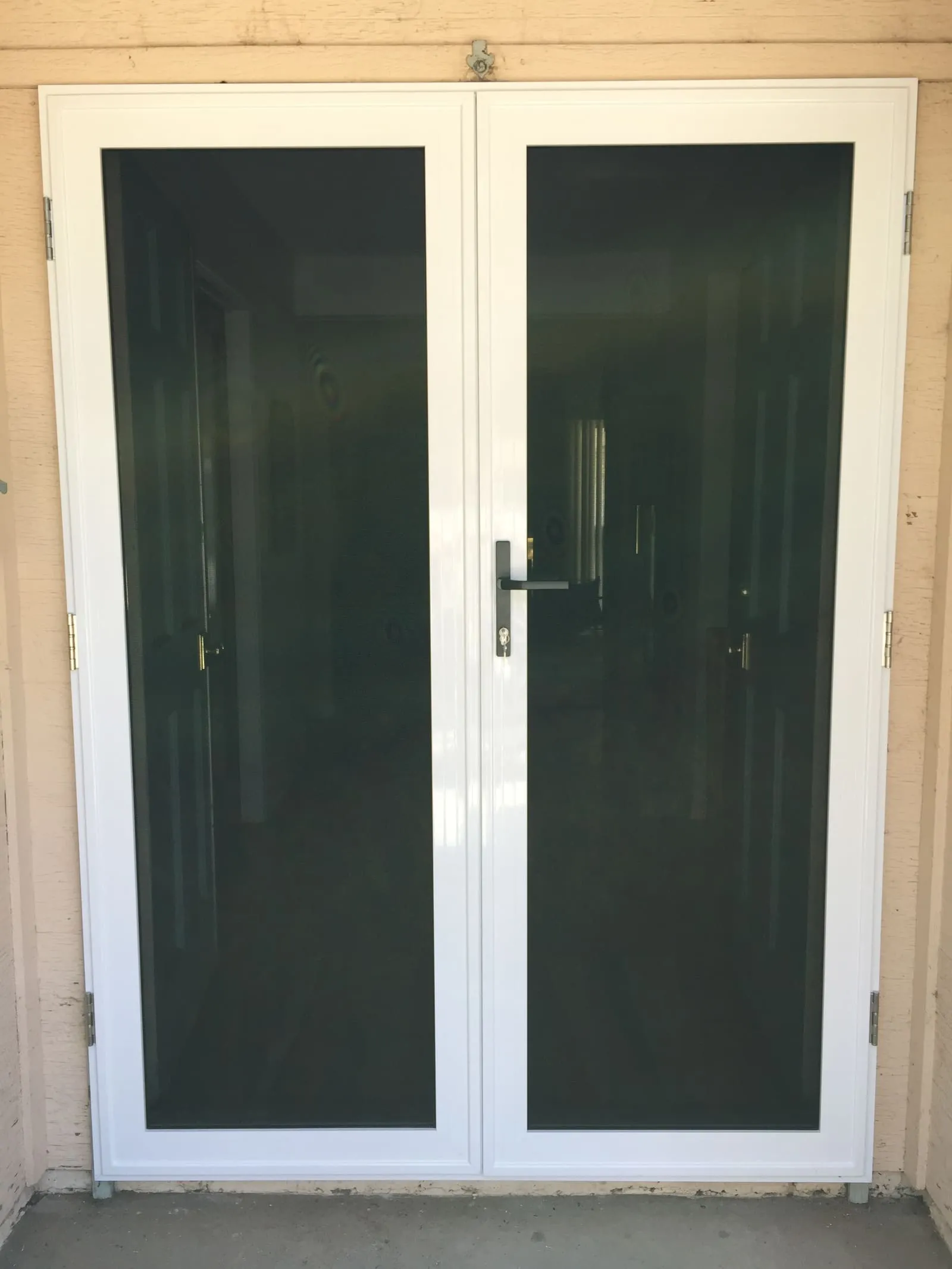
French doors are the retractable's home turf, because a roll that vanishes into a slim housing preserves the look the doors were chosen for. It is a fair point, and the counterpoint is quieter than people expect: a French-pair security screen in fine 316 mesh reads as a subtle shadow rather than a barrier, frames are powder-coated to complement the existing paint or stain, and most visitors have to be told the screens are there.
The French-pair screens work as a matched set: both leaves in 316 mesh, an astragal seal down the meeting stile so the pair is weathertight and bug-tight, a multi-point lock on the active panel and flush bolts on the second, so both leaves are locked steel when closed. Day to day you use one leaf like a normal screen door; when people come over, both swing clear and the opening is the full opening. A standard pair is $4,475 installed, priced as the pair it is.
Can you have both on one house?
Yes, and plenty of houses should. The products answer different questions, so the sensible split is by opening rather than by brand loyalty. The slider off the kitchen and the front entry are the openings people want open in the evening, and those get security screen doors. A side door to a covered walkway that is only ever open while someone is standing in it can keep its retractable. A single opening takes one or the other, since both mount to the same frame, but the house as a whole is not a referendum.
The in-home measure is where that sorting happens. It takes about 45 minutes, the $25 booking fee comes off your order in full, and the written quote matches the published prices. We install the Vista Security Screens security mesh line, not retractable or shade screens, so if a retractable is the right answer for an opening we will tell you that on the spot and leave it alone.
The honest summary: a retractable is the better insect screen. A security screen door is the only one of the two that lets you go to bed with the door open. Buy for the opening you actually want to leave open.
Retractable questions
Asked at the slider, answered plainly
Are retractable screen doors secure?
No, and they are not sold as if they were. A retractable screen rolls a light insect mesh across a doorway on a spring, and it is a comfort product: bugs out, air in, screen gone when you want the opening clear. It has no forced-entry resistance and its makers do not claim otherwise. If the question behind the question is whether you can leave the door open with the retractable screen closed and feel settled about it, the honest answer is that the screen adds nothing to the door that is open behind it. A security screen door is the product built for that job: woven 316 stainless mesh clamped into a rigid frame with its own multi-point lock, knife-shear tested to AS 5041-2003.
Can I lock a retractable screen door?
Most retractable screens close against a magnetic or light catch that holds the mesh in place, and some add a small latch so the screen stays put in a breeze. Those hold the screen shut; they do not secure the doorway, because the mesh they are holding is insect screen. A security screen door locks in the sense you mean. A hinged door throws stainless bolts at multiple points from one lever, a sliding security door locks with its own stainless latch independent of the glass, and a French pair carries a multi-point lock on the active leaf with flush bolts on the second, so both leaves are locked steel when closed.
Retractable screen or security screen for a sliding patio door?
It depends on what you want the opening to do. If you want a screen that vanishes into a housing when the slider is closed and you never plan to leave the glass open unattended, a retractable does that neatly. If you want the glass standing open all evening with the opening locked, a sliding security door is the product: it runs on its own track beside your existing slider, usually where the old insect screen sits today, glides on stainless rollers tuned to one-finger operation, and locks independently of the glass. Ours is $2,675 installed, flat, for a standard two-panel opening.
Can a dog or a toddler push through a retractable screen?
A retractable screen is insect mesh held by a spring and a light catch, so a dog at full speed or a toddler leaning on it is asking the screen to do a job it was never given. A determined dog and an insect screen have exactly one possible ending. Woven 316 stainless mesh shrugs off claws and full-speed dogs, which is why pet households are our most common upgrade, and a locked security screen door keeps a toddler on the right side of the doorway rather than relying on the screen to catch them. One honest caveat: we do not cut pet flaps into security panels, because that voids the manufacturer warranty. The full policy is on our pet door page.
Do retractable screens hold up in wind?
A retractable is a sheet of light mesh on a spring, so wind is the condition it likes least: a gust can pull the mesh off its catch or bow it out of its side channels, and most owners learn to roll it away on a windy afternoon. Whether a given model does better than that is a question for its maker, and we will not put a figure on a product we do not sell. A security screen door is a rigid frame fastened into the door jamb with the mesh clamped inside it, so the wind moves the air through it and nothing else.
Which one keeps the view better?
Open, the retractable wins outright: it rolls into its housing and the doorway is bare. Closed, the two are closer than people expect. A retractable is insect screen, and fine woven 316 stainless mesh reads as a light tint or a subtle shadow from a few feet away, which is why most visitors have to be told a French-pair security screen is there. The difference is that the security screen door is the view you get with the door open and locked, and the retractable is the view you get with the door open and nothing between you and the yard.
How much more does a security screen door cost than a retractable screen?
We cannot give you a fair gap, because we do not quote the product class and we publish no retractable figure we have not verified ourselves. What we can give you is our side, flat and installed: $2,475 for a hinged door, $2,675 for a sliding door, $4,475 for a French pair, all on the pricing page. A retractable screen is a different product doing a different job, and its price belongs beside a screen door price, not a security door price. If you are pricing both, put the retractable maker's installed figure next to ours and decide what the opening is for.
I already have a retractable screen on my French doors. Can you put a security screen there instead?
Usually, yes, and it is settled at the in-home measure rather than from a photo. The retractable housing mounts to the frame face or the jamb, and the French-pair security screens need that same real estate, so the retractable comes off and the pair goes on as a matched set: both leaves in 316 mesh, an astragal seal where they meet, and matched locks. Whether the doors swing in or out changes the configuration rather than the answer. What is left behind by the retractable is a few fastener holes to fill, which the measure will note.
Does Daylight Steel install retractable screens?
No. We install the Vista Security Screens security mesh line, not retractable or shade screens, and we would rather say that plainly than book a visit that wastes your afternoon. If a retractable is the right product for your opening, a retractable dealer is the right call. If you want the opening open and locked, that is us.
Does a security screen door get out of the way like a retractable does?
No, and we will not pretend otherwise. A security screen door is a hinged or sliding panel that stays in the opening; it swings or slides open like the screen door you grew up with, and when it is open it is still there, against the wall or beside the glass. That is the trade: a retractable disappears when open, a security screen door stays put and locks. Most people who choose ours decided the locked, open doorway was the point.
Keep the breeze. Add the lock.
An in-home measure with mesh samples and a written quote. The prices are already published, so you know the number before we ring the bell.
5.0 on Google · 2 reviews as of October 2026 · read them
Get your quoteOr just call (657) 695-2454 - or text us a photo of your opening and we'll reply with the number.