Buying guide · Published · Updated
Are security screen doors worth it in 2026?
An honest answer from people who sell them - numbers, cons, and all.
The short answer: for most homes, yes. Our flat published price for a quality hinged entry door installed is $2,475, and for a French pair it is $4,475. For that money the door does two jobs: it lives like a normal screen door, open to the breeze and the view, and its woven 316 marine-grade stainless mesh cannot be kicked in or cut. A cheap one earns a different verdict entirely. Here is the math, cons included.
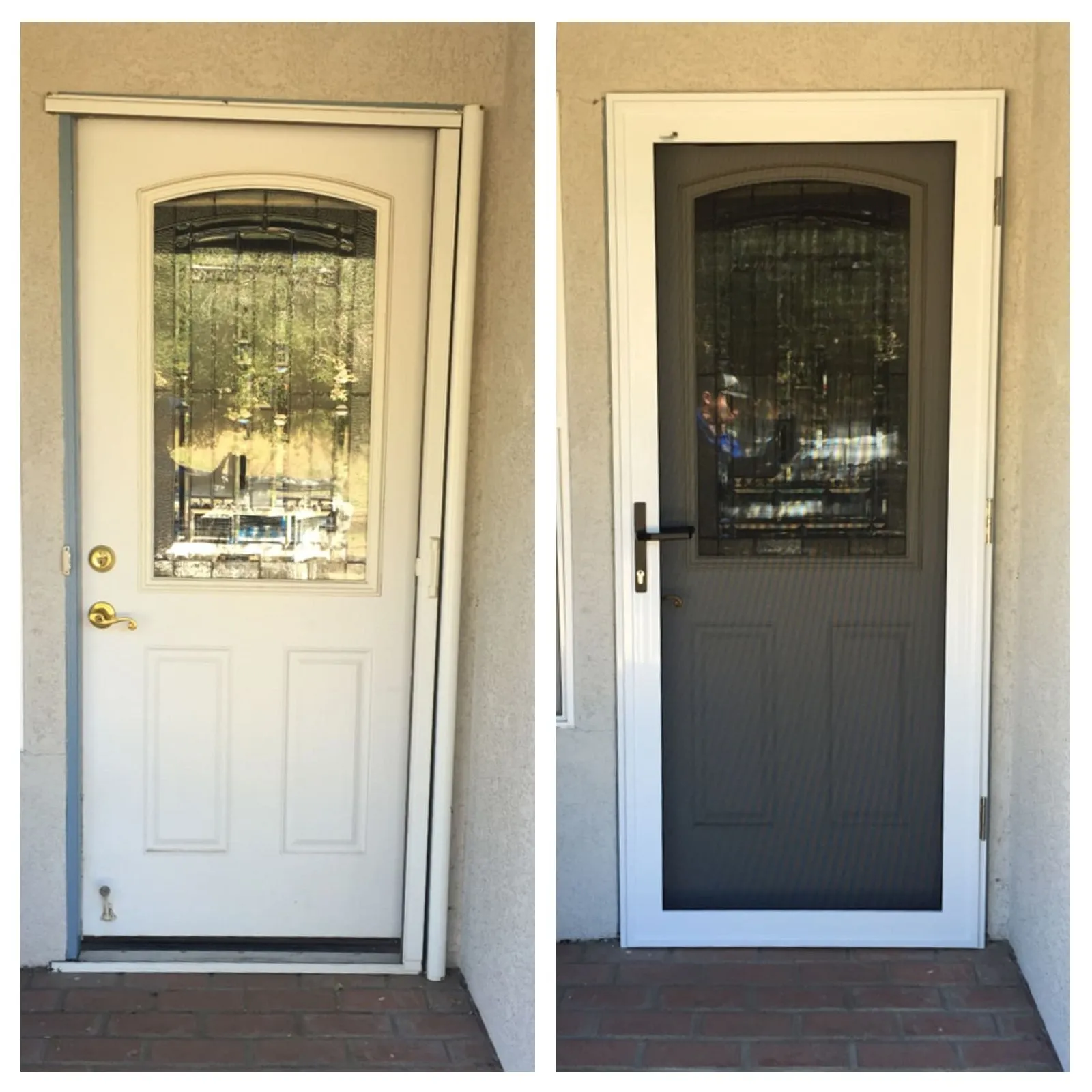
Ask the internet whether security screen doors are worth it and you will mostly hear from companies that sell them - and most of those answers dodge the two things you actually came for: real prices and real drawbacks. We sell them too. So here are both.
Worth it, or not worth it? Start with the opening
The verdict is not really about the product, it is about the doorway. The same $2,475 door is an easy yes on one opening and a poor buy on another, so here is the decision the way we would run it standing at your house.
| Your situation | Verdict | Why |
|---|---|---|
| You want the front door open for air and light most of the year | Worth it | The case the product was built for. The opening stays a locked steel door the whole time it is open, so the benefit is daily rather than hypothetical. |
| Your entry has glass, sidelights, or a patio slider | Worth it | The glass stops being the first line. The mesh is knife-shear tested to AS 5041-2003 and sits outside the pane. |
| You live within a few miles of the coast | Worth it, with one condition | The alloy is the entire decision. 316 marine grade resists salt-air chloride corrosion; 304 pits. Get the grade number in writing or skip the purchase. |
| Pets keep going through your insect screens | Worth it | Stainless mesh does not tear under claws. Note that we do not cut pet flaps into security panels, because that voids the warranty. |
| Your deadbolt and strike plate are still original | Not first | Do the locksmith afternoon first. It costs a small fraction of any door we make and fixes the weaker link. |
| The opening is a side door nobody uses | Usually not | The value here is daily use. On a door you open twice a year the arithmetic rarely survives a cold read. |
| Your budget is a few hundred dollars | Not this product | No custom 316 system exists at that price. A big-box door is the honest answer in that budget. |
| You rent, or you need the door this weekend | No | It is a permanent fixture anchored to the opening, and every door is measured and fabricated before install. |
What does a quality security screen door actually cost?
Daylight Steel publishes flat installed prices, which is still rare in this industry: hinged security screen doors are $2,475 per door, sliders $2,675 per opening, French pairs $4,475, and security window screens from $825 per window, priced by glass size. Every number includes the in-home measure with a written itemized quote, custom fabrication to your exact opening, and installation by our own employees - the full table is on our pricing page, and our cost guide explains how the price stays flat.
The number people compare that against is the big-box door, and the shelf now spans more than people expect. Home Depot's own listings, re-read on 9 October 2026, run from about $180 for a basic steel grille door to about $750 for a large steel door with an expanded metal screen, and then a separate tier of aluminum doors with Meshtec mesh screens from about $1,180 to about $2,860 for a full-view model. Every one of those is door only, in stock sizes, before installation. The top of that shelf now costs more than our installed price. The gap that remains is not markup. It is a different product:
| Big-box steel door | Custom 316 stainless system | |
|---|---|---|
| Price | About $180 to about $2,860 depending on the screen, door only; install extra (Home Depot, October 2026) | $2,475 installed, flat (hinged entry) |
| The screen itself | Expanded metal or a standard insect screen behind a decorative grille | Woven 316 high-tensile stainless mesh, knife-shear tested to AS 5041-2003 |
| Fit | Stock sizes, shimmed to your opening | Measured, then fabricated to the opening |
| Near the coast | Painted steel; scratches invite rust bloom | Marine-grade alloy, salt-spray tested to ASTM B117 |
| After the sale | Varies by product | 10-year manufacturer powder-coat warranty, 1 year on hardware |
Can a security screen door be kicked in?
A quality one, no - and the reason is a system, not a single heroic part. Woven high-tensile 316 mesh spreads any impact across thousands of wire intersections instead of one point. The mesh is mechanically clamped into a reinforced frame rather than glued at the edges, the frame anchors into the door jamb, and the lock throws into solid structure. Force applied anywhere gets distributed everywhere, which is why the mesh cannot be kicked in or cut with a knife. Daylight Steel doors are built on Vista Security Screens systems, knife-shear tested to Australian standard AS 5041-2003 - the benchmark from the country where this product category has been tested and refined for decades.
The same question exposes the budget doors. On a big-box unit the grille is genuinely strong, but the actual screen behind it is ordinary insect mesh, so the barrier has a soft center. If you are weighing materials, our guide to 316 stainless versus standard mesh compares the options wire by wire, and if the door you were pricing is a glass storm door, our storm door comparison sets the two side by side for a mild climate.
How do you tell a real one from a security-style one?
The word "security" on a box is not a specification, and the budget end of this category trades on that. Six questions sort the doors quickly, and every one of them has a plain answer a vendor can give in writing. If the answer is a shrug, so is the door.
| Ask | A real answer sounds like | A warning sign |
|---|---|---|
| What is the screen made of? | Woven stainless mesh with the grade named, ideally 316 near the coast | "Steel" with no grade, or a grille over ordinary insect screen |
| Which test, and what result? | A named standard and the specific test, such as AS 5041-2003 knife shear | "Tested" or "certified" with no standard named |
| How is the mesh held in the frame? | Mechanically clamped into the frame along its edges | Rolled in with rubber spline, the way an insect screen is |
| What does the frame fasten into? | The door jamb, with fasteners chosen for the opening | Trim, stucco skin, or "whatever is there" |
| Where does the lock throw? | Into solid structure, with the lock type named | A single latch into a thin strike |
| What is warranted, for how long? | Separate terms for finish and hardware, in writing | "Lifetime" with no document behind it |
Our own answers, for comparison: woven 316 marine-grade stainless mesh, knife-shear tested to AS 5041-2003, clamped into a powder-coated aluminum frame on Vista Security Screens systems, anchored into the jamb, with a 10-year manufacturer powder-coating color warranty on mesh and panels and 1 year on hardware.
One practical check before anyone quotes you: look at the jamb the door will fasten to, especially the bottom foot of it where sprinkler water and rain collect. Press a screwdriver tip into the wood. If it sinks in, the jamb is soft, and a strong door anchored to soft wood is only as strong as the wood. Show it to whoever measures, and get the repair onto the quote or done first. That is a cheaper fix than any door, and it is the con no product page mentions.
What are the honest cons?
Every vendor page in this category lists the pros. Here are the cons, stated plainly, because you will discover them anyway:
The price is real. A custom 316 door costs roughly ten times the sticker on a boxed steel door. If the opening in question is a side door nobody uses, run that math with a cold heart - the value of these doors is daily use, not the receipt.
You wait for it. Every door is measured, fabricated to the opening, and powder-coated before install. Your written quote states your build timeline, but this is not a purchase that goes home in the trunk today.
Some communities want paperwork. A number of Orange County HOAs require architectural approval for anything visible from the street, usually a form and a color chip. Our HOA approval guide walks through the process.
The mesh collects what the air carries. A tight stainless weave traps dust and salt the way any fine screen does. The fix is a freshwater rinse a few times a year - more often within sight of the ocean - but it is a task, and we would rather tell you now.
And the category's biggest con belongs to the cheap doors. A decorative grille over insect mesh delivers the look of security with the substance of a screen door, at several hundred dollars. We would honestly rather you keep the screen door you have than pay real money for that. If the budget is a few hundred dollars, read our big-box versus custom comparison first, so you know exactly what the money buys.
Do they raise home value or lower insurance?
Home value first: we could not find an appraisal study that isolates security screen doors, so we will not invent one. What we can say is narrower and true - the doors are a visible, permanent upgrade that buyers can operate with their own hands, and unlike most home security spending, they add daily livability rather than sitting in a closet.
Insurance deserves a straighter answer than the industry gives it. An insurance-discount claim circulates widely in this category, and AI answer engines now repeat it as settled fact: ask one whether security screens lower your premium and it will tell you homeowners report reductions of up to 20 percent, crediting a manufacturer for the figure. So we went looking for the source. Re-checked on 14 August 2026, the two manufacturer pages those answers cite for it carry no insurance claim at all, and no percentage. We are not saying nobody ever published that number. We are saying we could not find it where the internet says it lives, which is reason enough to treat it as folklore until an insurer puts it in writing.
The insurers' own pages tell a quieter story. Progressive's guidance on security systems and home insurance, updated 29 January 2026 and re-read 14 August 2026, sets out what actually earns a protective-device credit: security systems with cameras, door and window sensors, and motion sensors; monitored smoke detectors and fire alarms; sprinkler systems; and water sensors. Security screens and security screen doors appear nowhere on it. As of August 2026, Daylight Steel could not find a single California insurer that publishes a homeowners discount for security screen doors, and we do not claim one. Ask your own insurer - protective-device credits vary by carrier, and if yours offers something, get it in writing. Just do not buy the door for a discount nobody will show you.
What does it cost per year? The arithmetic nobody publishes
Spread over just the 10-year finish warranty, a $2,475 hinged door works out to $247.50 per year. Stretch it across a 20-year service life, which stainless systems of this class routinely reach, and it is $123.75 per year. To be clear about what that is: arithmetic on a purchase price and a service life, not a savings claim. The warranty backs the powder-coat finish for ten years; how long the door serves past that depends on the opening, the maintenance, and the salt air. But when you weigh the number against anything else bought for the front of a house on a recurring basis, the division is worth doing yourself, with your own assumptions, before deciding the up-front price is the whole story.
Renting, or renting it out?
This question arrives from both ends of the same lease, and the open web answers neither of them: search it and you are handed cameras and alarm systems, because those are what a tenant can buy without asking anyone. A security screen door is a different class of purchase, and the honest answer genuinely depends on which end of the lease you are standing on.
If you rent. The door fastens to the door jamb and stays with the building, so this is the property owner's decision rather than yours. That is less discouraging than it sounds, because the request is an easy one to say yes to: it is a fixture that improves the unit and does not have to be undone later. Get three things in writing before anyone measures anything. Permission to install. Who is paying. And what happens at move-out, which is the one people skip - the ordinary outcome is that the door simply stays, since it was fabricated to that opening and is worth nothing off it, so what you actually want on paper is that you will not be asked to remove it or to pay for its removal. If the owner is paying, they will usually want the invoice in their own name so the manufacturer warranty sits with the property. If you are renting a room with the door in question serving a bedroom, the rule that matters is not in your lease at all, it is in the California egress code.
If you own the property. The argument here is durability, not security. Ordinary insect screens are a turnover consumable: they tear, and rescreening is a small bill that comes back every few tenants forever. A woven 316 stainless panel clamped into a rigid frame is not a consumable. The alloy was specified for salt air rather than for tenants and happens to handle both, the frame is powder-coated aluminum rather than the rolled-and-splined assembly that fails, and the whole thing is a fixture that stays with the property and needs no decision again after the first one. A hinged door is $2,475 installed and window screens start at $825, both flat and published, which at least makes it a capital number you can plan against rather than a quote you have to chase. What we are not going to tell you is that it raises rent or returns its cost at sale, because we have no data supporting either claim and the category is full of people who will say it anyway.
Either way we need the owner's authorization on the quote, whoever is paying for it. That is not a sales position, it is just who is allowed to alter the building.
Who should not buy one?
Renters who cannot get owner sign-off. Covered directly above: the permission is the whole gate, and without it this is not a purchase you can make.
Anyone shopping under $500. No custom stainless product exists at that price, and we will not pretend otherwise. A big-box door is the right option in that budget - our comparison guide lays out what it does and does not do.
Anyone who needs a door this weekend. Custom fabrication has a timeline. If the date matters more than the fit, a stock door wins on the calendar.
Everyone else - and especially anyone who wants to sleep with the door open to the ocean air - is exactly who this product was built for. The instant estimate takes about two minutes, and the numbers it uses are the same ones published above.
Worth-it questions
Asked constantly, answered plainly
We just moved in and are deciding what to do about the doors. Is a security screen door the first thing to buy?
Usually not first, and we sell them. First money goes to the basics on the solid doors: a real deadbolt, a reinforced strike plate with long screws, and working locks on the sliders - a locksmith afternoon that costs a small fraction of any door we make. A security screen door is the upgrade after that, and it changes how you live in the house rather than only how it locks: doors open to the breeze and the view, and the opening stays a locked steel door the whole time. When you get to that decision, the numbers are already published - $2,475 installed for a hinged door, flat.
Are security screen doors worth the money?
For a doorway you actually use, yes. A quality hinged door is $2,475 installed, flat, and does two jobs at once: it works as a normal screen door you leave open to the breeze, and its woven 316 stainless mesh cannot be kicked in or cut. For a rarely used opening on a tight budget, a plain insect screen and good locks may be the more honest answer.
Can a security screen door be kicked in?
A quality one, no. Woven 316 high-tensile stainless mesh spreads impact across the whole weave, the mesh is clamped into a reinforced frame, and the frame anchors into the door jamb - the system is knife-shear tested to Australian standard AS 5041-2003. Big-box grille doors are a different product: the decorative grille is strong, but the ordinary insect screen behind it is not.
Do security screen doors keep bugs out?
Yes. The stainless weave is at least as tight as a standard insect screen, so flies, mosquitoes, and moths stay outside. A security screen door does everything a normal screen door does; the steel is an added property, not a trade-off.
Can you see through a security screen door?
Yes. From a few feet away the fine woven mesh reads like a light window tint - the view and the daylight stay, with a slight cut in glare that many people prefer. It looks nothing like bars or a grille. Real inside-out photos, and the night-time privacy flip, are in our see-through guide.
Will a security screen door ruin my curb appeal?
It should not, and the finish is where that is decided. Frames are powder-coated aluminum in ten standard architectural colors - black, white, almond, adobe, brown, bronze, light grey, and three metallics - and every one is included in the flat price, so the right color for your house is never an upcharge. Picked well, the frame reads as trim and the mesh reads as a light tint, which is why most people looking at the house see the door rather than the screen. The cheap doors earned this category its reputation: a decorative wrought-iron grille announces itself from the street, and no color fixes that.
Can a renter install a security screen door?
Only with the property owner's written permission, because it is a permanent fixture that fastens to the door jamb rather than a product you take with you. That is a real answer rather than a brush-off, and the three things to get in writing are permission to install, who is paying, and what happens at move-out. The ordinary outcome is that the door stays with the property, since it was fabricated to that specific opening and is worth nothing off it, so the point to settle in advance is simply that you will not be asked to remove it or to pay for its removal. We need the owner's authorization on the quote regardless of whose money buys it.
Are security screen doors worth it for a rental property?
The case for an owner is durability rather than security. Ordinary insect screens are a turnover consumable: they tear, and rescreening is a small bill that comes back every few tenants. A woven 316 stainless panel clamped into a rigid frame is not a consumable, the alloy was chosen for salt air and happens to survive ordinary use as well, and the door is a fixture that stays with the property and needs no per-tenant decision after the first one. What we will not tell you is that it raises rent or pays for itself, because we have no data supporting either claim.
How long does a security screen door last?
Decades, with almost no care. 316 marine-grade stainless resists the salt-air corrosion that pits cheaper steel and aluminum mesh, the powder-coated mesh is salt-spray tested to ASTM B117, and the powder coat carries a 10-year manufacturer warranty. Maintenance is a freshwater rinse a few times a year.
Do security screen doors cut heat and UV coming into the house?
Some, and the honest version of this answer is shorter than the marketing version. A fine woven mesh shades the opening, so it trims glare and some solar heat gain the way any tight screen does, and on a west-facing door in August that is a real comfort difference. Numbers are where this category gets loose. You will see specific percentages for solar heat gain and UV attached to other brands, and those figures belong to the exact mesh and the exact test they came from, not to security screens as a class. Vista publishes no shading or UV figure for the mesh we install, so we do not print one - we would rather give you no number than someone else's. If shading matters to your decision, ask every vendor including us for the figure for the exact mesh being quoted and the test behind it, and treat a percentage with no named test as a sales adjective.
Is there a US test standard for security screen doors?
Not one written for residential security screens. The standard you will see quoted for this category is Australian: AS 5041-2003, which includes the knife-shear test the mesh we install is rated to. The US test that sometimes appears in answers is ASTM F3038, a timed method for forced-entry-resistant systems, and it is real, but ASTM describes it as intended mainly for commercial, government and military installations, simulating a group attacking with hand tools against a clock. A residential screen door citing it should tell you which version, which rating level, and who ran the test. A door that names no test at all is telling you something too.
Will a security screen door lower my home insurance?
Probably not, and we would rather say so than sell on it. The "up to 20 percent" discount figure that circulates in this category, including inside AI-generated answers, did not survive our own check: re-read on 14 August 2026, the manufacturer pages those answers cite carry no insurance claim at all. Meanwhile Progressive's own guidance on security systems, updated 29 January 2026, lists cameras and sensors, monitored smoke detectors, sprinkler systems, and water sensors as the devices that earn a protective-device credit, and security screens are not on the list. Protective-device credits do vary by carrier, so ask yours directly, and if there is something, get it in writing. Just do not let a discount nobody will show you decide the purchase.
What does a security screen door cost per year?
Run the division the way we would: $2,475 installed for a hinged door, held against just the 10-year written warranty term, is $248 a year, or about $21 a month, for a door that is in use every day. That is the worst-case arithmetic, because stainless mesh and a powder-coated aluminum frame do not stop working on their tenth birthday; every year past the warranty pushes the real figure lower. We are not going to invent a lifespan number to flatter the math - the honest statement is that the warranty floor alone prices this like a streaming subscription, and the door outlives the floor.
Do the math on your own doorway.
An in-home measure ($25 to book, credited in full to your order), a written itemized quote, prices already published. If the numbers do not work for your home, we will be the first to say so.
5.0 on Google · 2 reviews as of October 2026 · read them
Get your quoteOr just call (657) 695-2454 - or text us a photo of your opening and we'll reply with the number.