Project story · Hinged security screen door · Published
The front door that gets to stand open now
A solid entry door on gray stucco, fitted with a white full-view hinged security screen door: before and after, and what changed about the doorway.
At a glance: a plain solid entry door on gray stucco, fitted with a white full-view hinged security screen door at the flat $2,475 installed price, in under two hours on site. One uninterrupted panel of woven 316 marine-grade stainless mesh in a white powder-coated frame, hung on the outside of the existing jamb, with a multi-point lock keyed separately from the front door. The entry door was not replaced, the stucco was not touched, and the door now stands open behind locked steel instead of staying shut.
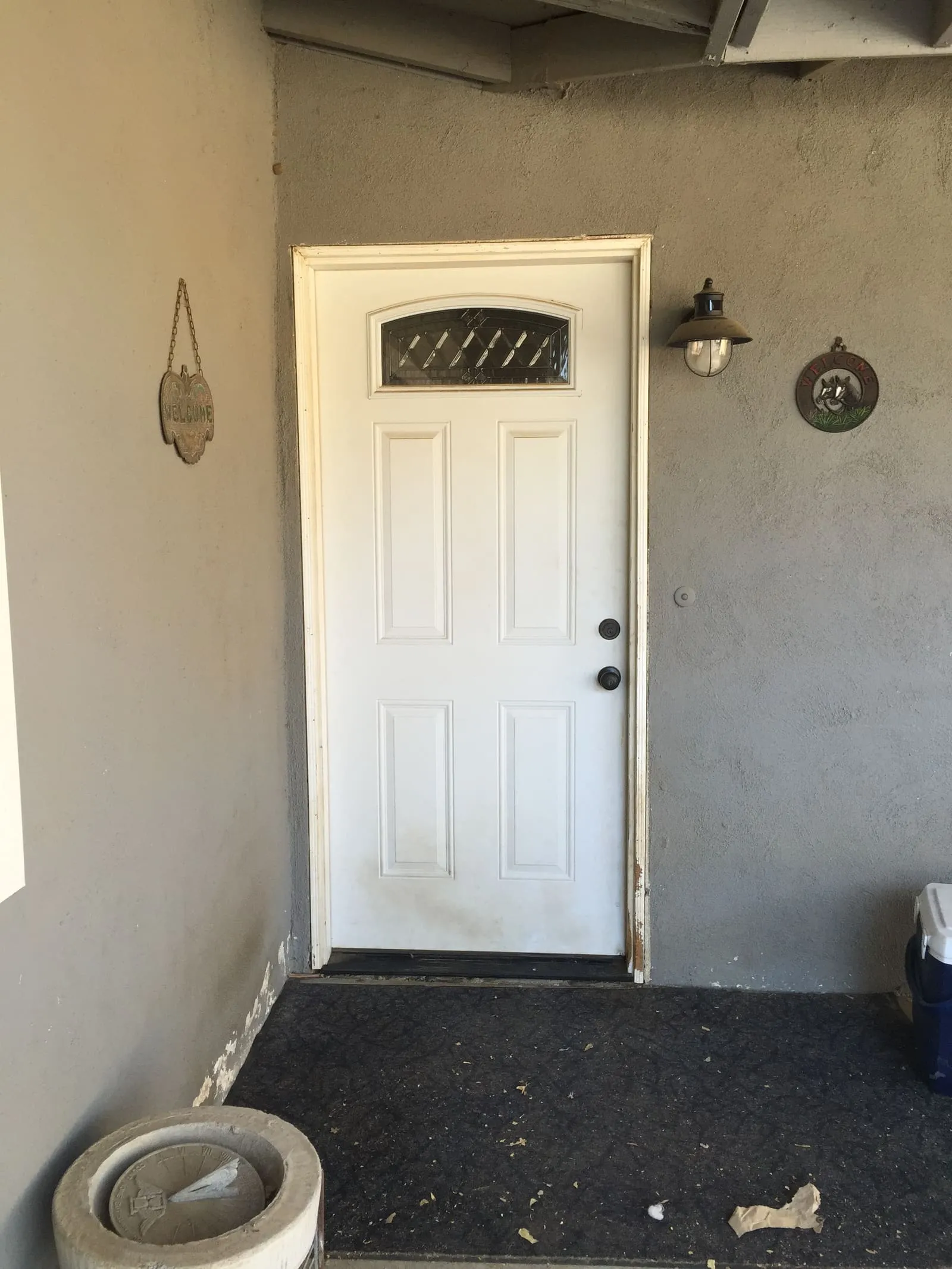
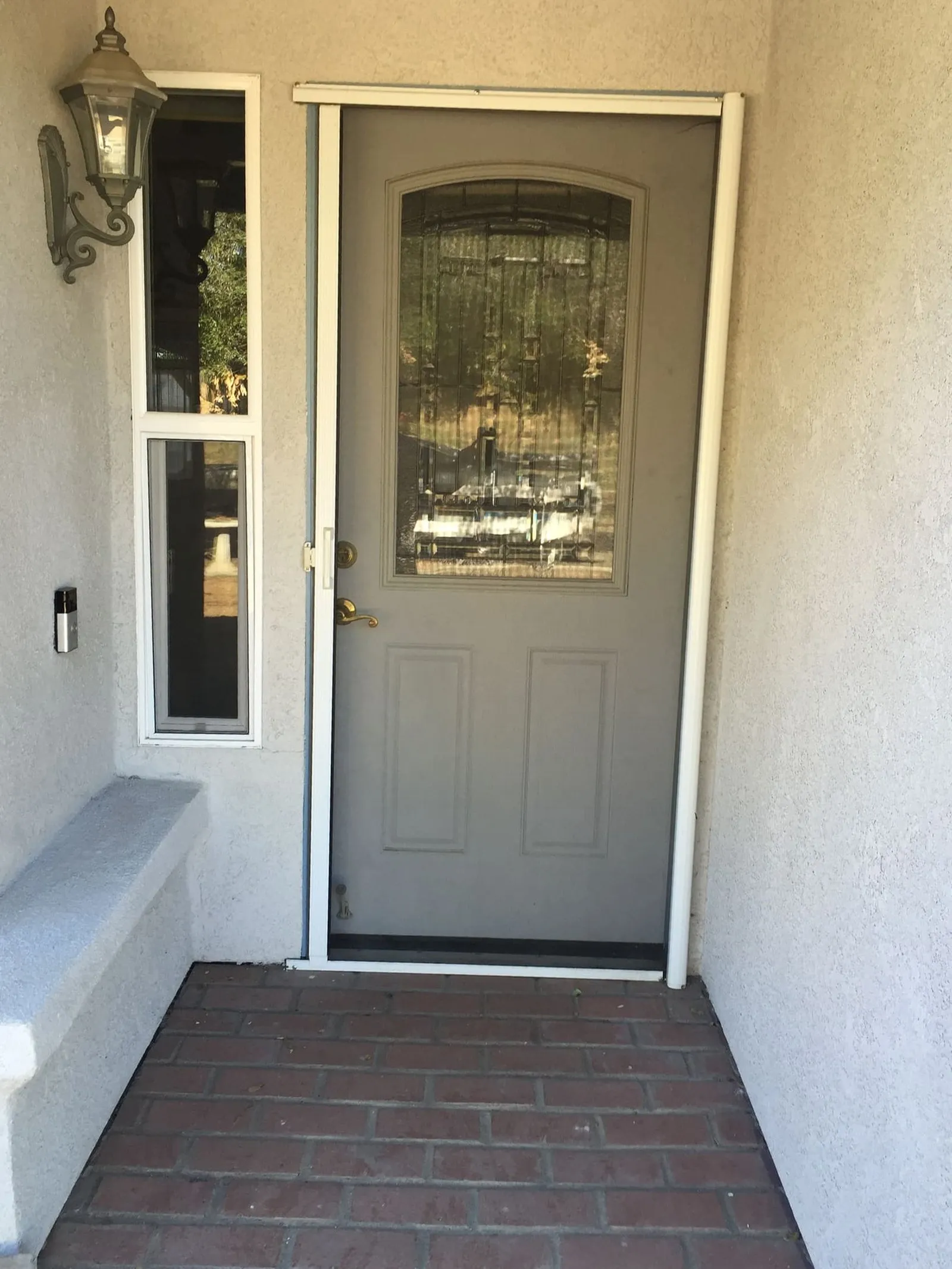
Before: a solid door and nothing else
A covered entry, gray stucco on every side, a white six-panel door with a small arched glass lite up top, a welcome plaque on each wall and a lantern by the knob. It is a doorway thousands of Orange County houses share, and it had the same problem all of them have: with the door shut the house had no idea what the evening was doing outside, and with the door open the opening was simply open. There was no screen of any kind, so there was no in-between. Fresh air meant an unguarded doorway, which meant the door mostly won the argument and stayed closed.
That is worth stating plainly because it is what a security screen door actually replaces. It does not replace the entry door. It replaces the choice between shut and wide open.
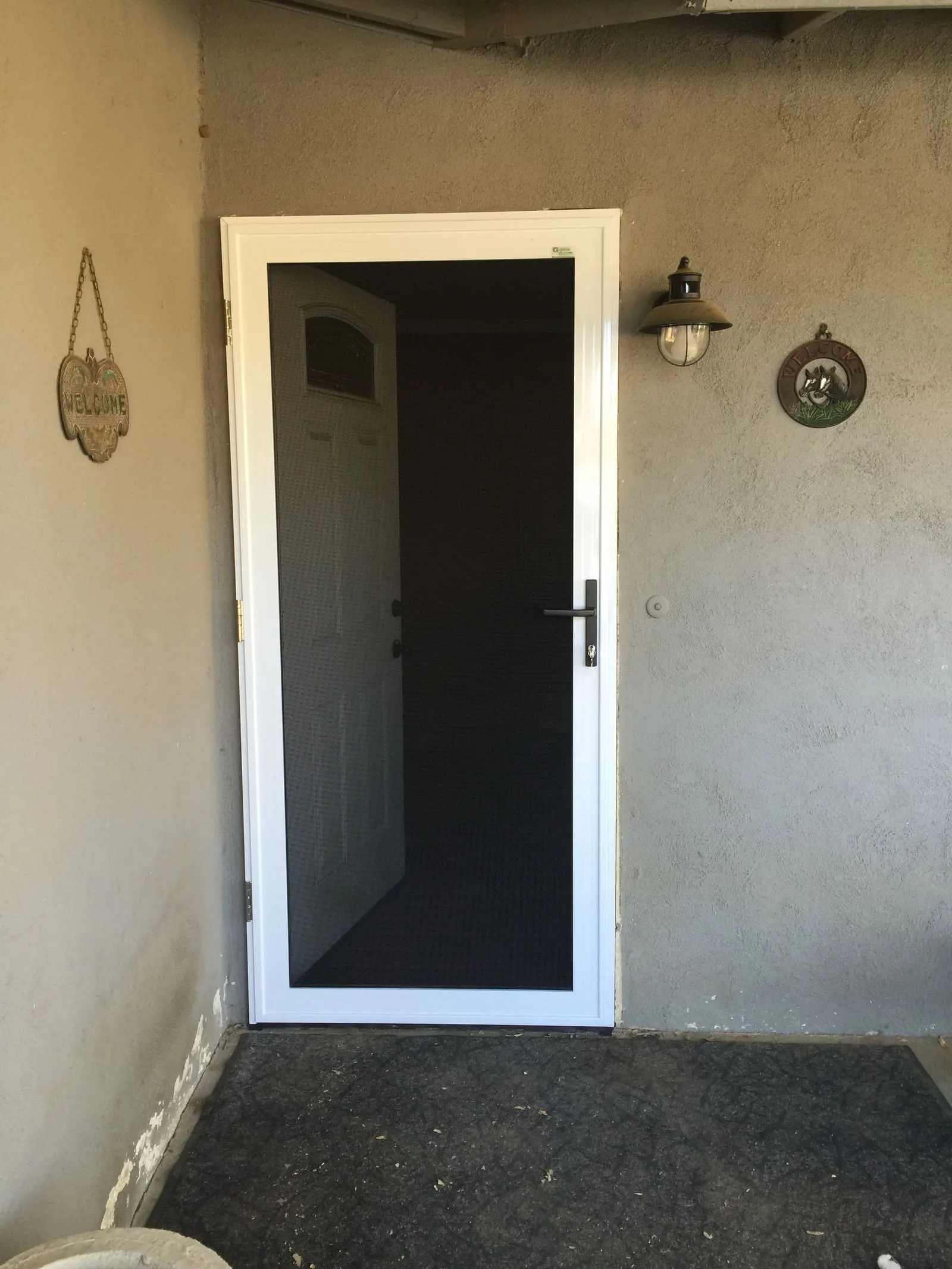
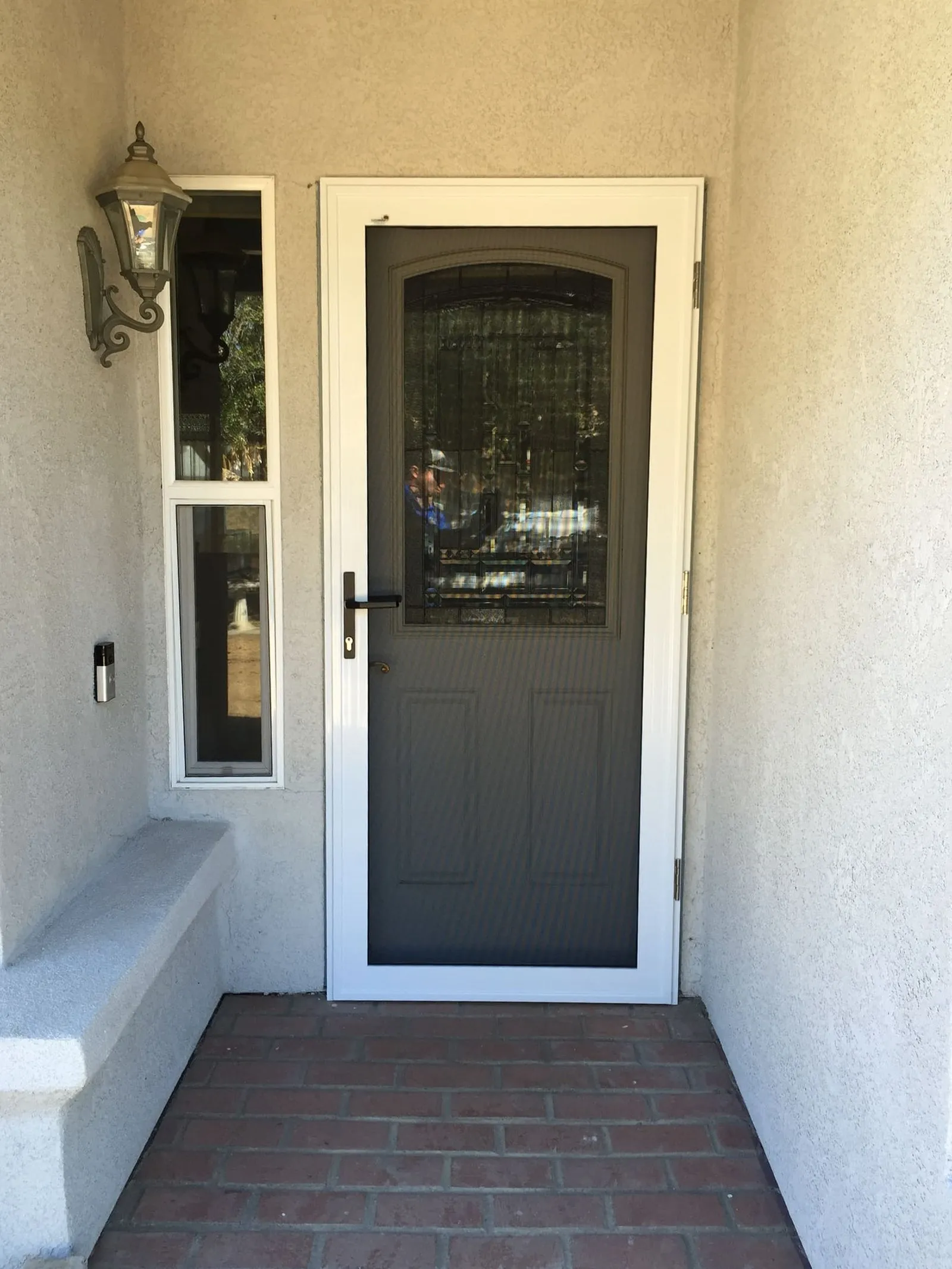
After: one clean panel of 316 mesh in a white frame
What we installed is a full-view hinged security screen door: no midrail, no decorative scrollwork, one uninterrupted panel of woven 316 marine-grade stainless mesh clamped into a slim aluminum frame and powder-coated white. It hangs on the outside of the existing door frame and swings out on its own hinges, so the entry door behind it keeps working exactly as it did. The mesh is the same marine-grade alloy we put in every product; there is no lesser mesh on offer.
The handle is a slim black lever that runs a multi-point lock: one turn throws stainless bolts at the top, middle and bottom of the frame. It keys separately from the entry door, which is the detail that makes the whole thing work. The front door can be unlocked and standing open while the opening itself is a locked steel door.
Why white on gray stucco
The instinct with a security product is to make it disappear, and on a light house the way to do that is to match the frame to the trim rather than to the wall. Here the entry door and the jamb are white, so the frame is white. The mesh reads as a dark panel, the frame reads as the door surround it always had, and from a few steps back the whole thing looks like a screen door, which is the point. A black frame would have been perfectly correct on a dark-trim house and would have drawn a hard rectangle on this one.
All 10 standard architectural colors are included in the flat price, and the honest advice is not to pick one from a screen. We bring real frame and mesh samples to the measure and hold them against your own paint in your own light, and most people decide in about a minute once they see them side by side. The full range is on the hinged door page.
What changed about the doorway day to day
The after photo shows it: the entry door is open, the hallway is visible through the mesh, and the opening is locked. That is the new default for this house. The door can stay open through the evening for the air and the light, the screen handles whoever knocks, and locking up at night means turning one lever rather than closing the house.
| Everyday moment | Before, solid door only | After, white full-view screen door |
|---|---|---|
| Warm evening | Door shut, or door open and the opening unguarded | Door open, screen locked, breeze through the mesh |
| Someone knocks | Open the only door in the opening | Talk through locked steel, then decide |
| View from inside | A small arched lite at eye level | The whole doorway, walkway and porch |
| Locking up | Close and lock the entry door | One lever throws three bolts; the entry door is optional |
| The wall around it | Gray stucco, welcome plaques, lantern | Unchanged: the frame lives in the jamb, not the wall |
The privacy question comes up at every measure, so here is the honest version. In daylight the outside is brighter than the hallway, so from the walkway the mesh reads like a light window tint and the inside stays indistinct, while from inside you look straight out. After dark with the lights on, that reverses, exactly as it does with any window. What sleeping with the door open behind a locked screen actually feels like is its own guide: is it safe to sleep with your door open.
How it attaches, and why the stucco was never touched
Look at the two walls in the photos. The plaques, the lantern and the stucco texture are identical, because the screen door does not attach to the wall at all. The frame fastens into the door jamb, the structural frame the entry door already hangs in, with fasteners running through the jamb into the framing behind it. The stucco field around the opening is not cut, drilled through, patched or re-textured, and the opening is not resized, so nothing structural moves.
It also comes off again if a future owner ever wants it gone. Removal is an unscrewing job that leaves fastener holes in the jamb to fill, not construction to undo. The whole install sequence, from the 45-minute measure through the walkthrough where you work the lock yourself, is in our guide to what installation involves.
Two more front entries, same idea
The gray-stucco door above is the cleanest example of the before-and-after, but the same white full-view door lands on very different entries. These are two more from our own installs, shown for the variety rather than as one story: a full-glass door and a glass-lite door on a brick step.
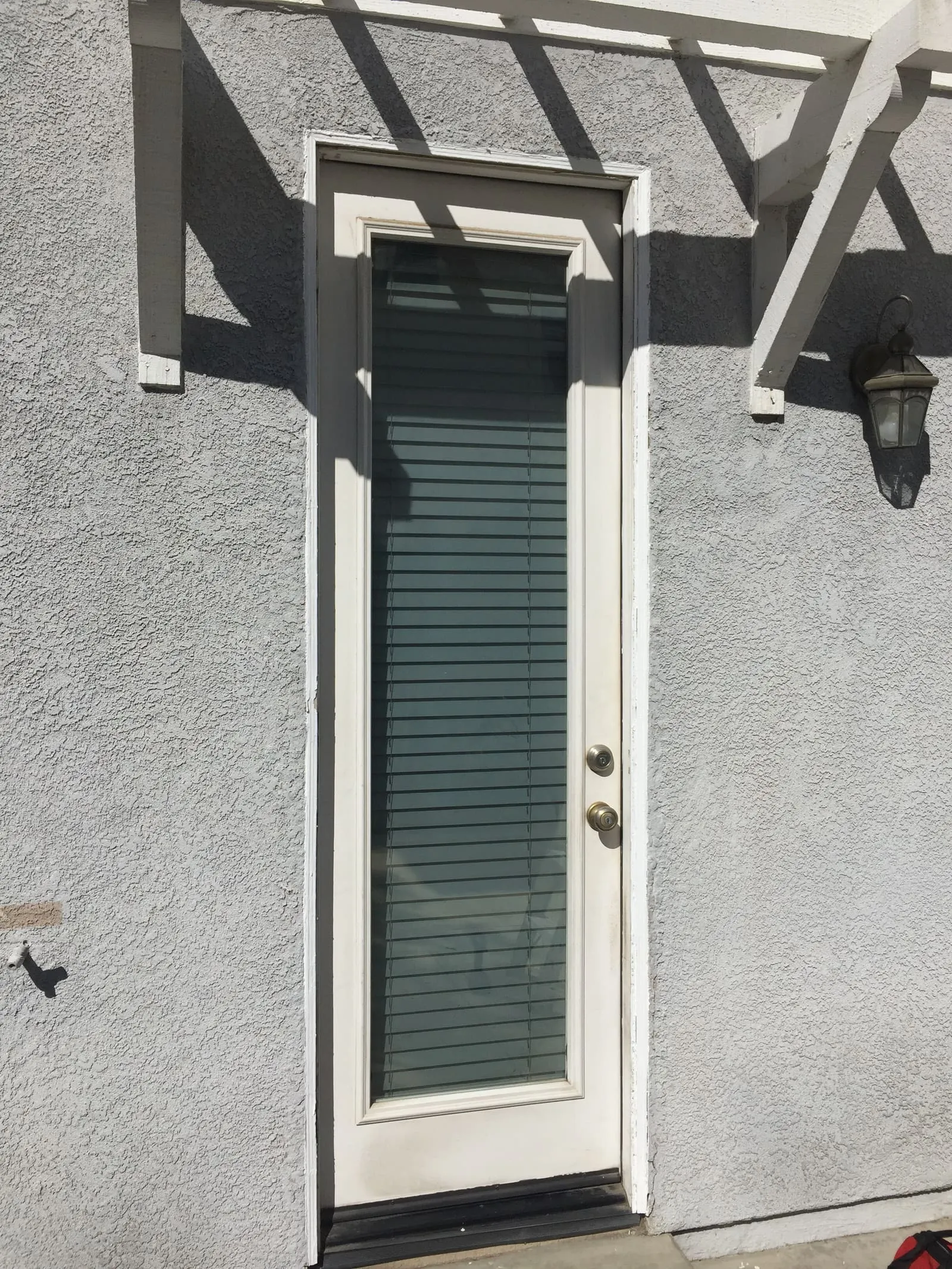
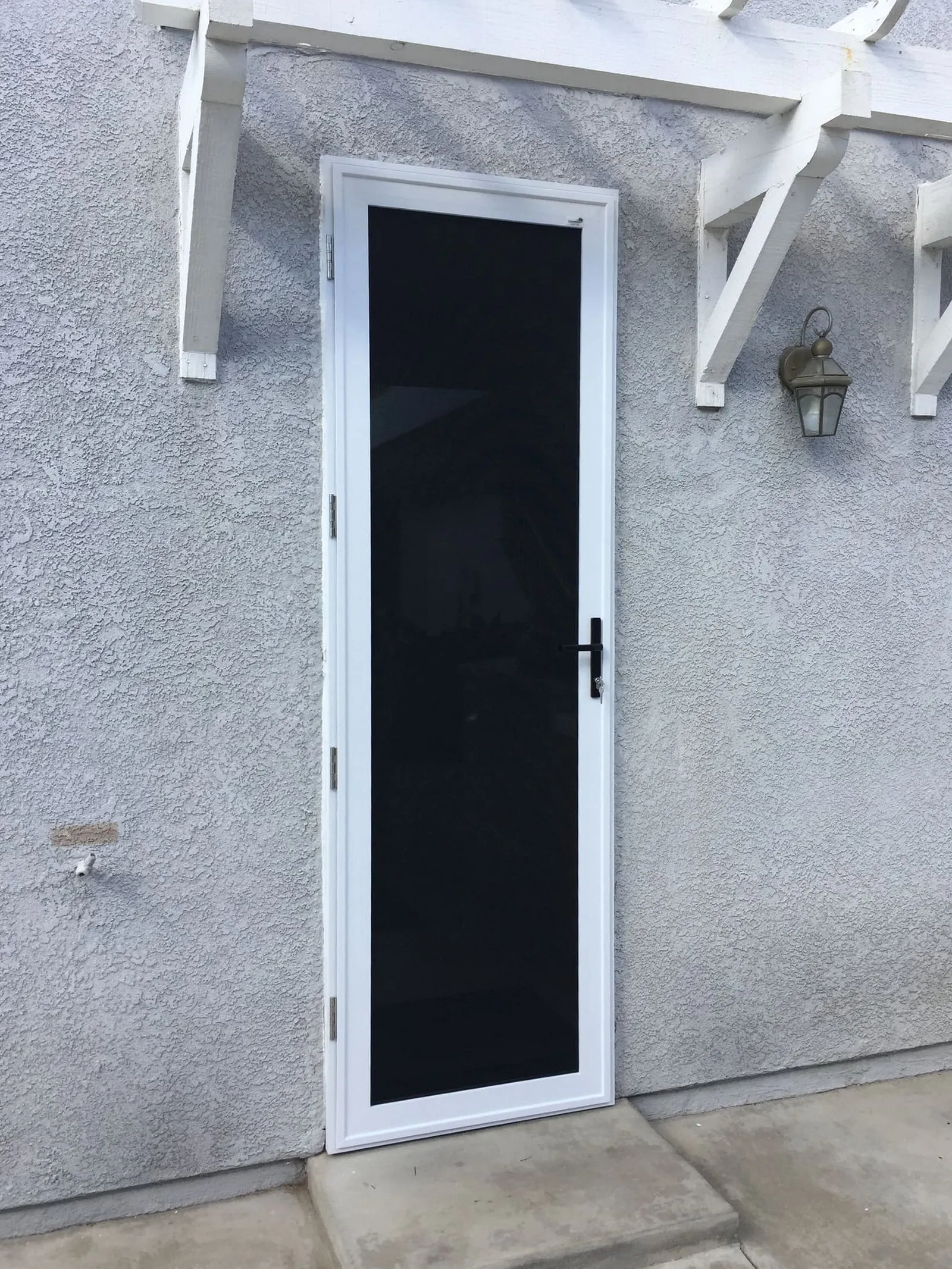
The glass door is the case people with a full-lite entry ask about: the whole door is glass, so a screen door that blocked the view would have thrown away the reason the door was chosen. The full-view panel keeps the doorway one clean rectangle, and the frame sits inside the same white jamb, so in bright sun the entry reads as a taller, darker version of what it was.
The brick-step entry makes the attachment point visible in a different material. Brick, block, tile and siding entries all work the same way as stucco for the same reason: the jamb is the anchor in every one of them, and the brick was left alone. Working with a double door or a slider instead? Read the brick-arch French-pair story or the backyard slider story.
What this door costs and what happens next
Hinged security screen doors are published at a flat $2,475 installed for any standard single entry in our service area, front door, side door or kitchen door, and the written quote at the measure says the same number. The in-home measure books for $25, which comes off your order in full. It takes about 45 minutes, fabrication typically runs 3 to 4 weeks per Vista's factory FAQ as of July 2026, and install day for a single hinged door is usually under two hours. The written terms are a 10-year manufacturer powder-coating color warranty on mesh and panels; 1 year on hardware. The full price list, including sliders, French pairs and window screens, is on our pricing page.
Every photo on this page is one of our own installs, no stock photography. New stories land as jobs finish, because this is a young company and we would rather show the work than talk about it. The wider set is in the photo gallery.
About this install
Questions people ask
What door is this exactly?
A hinged security screen door in the full-view style: one uninterrupted panel of woven 316 marine-grade stainless mesh inside a slim powder-coated aluminum frame, in white, hung on the outside of the existing entry door frame. It is the standard single-entry product we install, built on the Vista Security Screens system, with a lever handle and a multi-point lock that keys separately from the front door.
Did the original front door get replaced?
No. The white entry door in the before photo is the same door standing open behind the mesh in the after photo. The screen door is a second, independent layer on the outside of the opening. The entry door, its hardware, its weather seal and its threshold were all left exactly as they were.
How much did this install cost?
$2,475 installed, which is the flat published price for any standard single entry in our Orange County service area: front door, side door or kitchen door. The written quote at the in-home measure carries the same number, and the $25 booking fee for the measure comes off the order in full. The whole price list is on our pricing page.
How long did the install take?
A single hinged door like this one is usually under two hours on site. The longer part of the timeline is the build: after the 45-minute measure, fabrication typically runs 3 to 4 weeks per Vista's factory FAQ as of July 2026, with the exact build window stated on the written quote. The hour-by-hour version is in our installation guide.
Did the stucco get cut or drilled?
No. The frame fastens into the door jamb, the structural frame the entry door already hangs in, with fasteners running through the jamb into the framing behind it. The stucco field around the opening is not cut, patched or re-textured, which is why the wall in the after photo looks exactly the way it did in the before photo, wall art and porch light included.
Why is the frame white and not black?
Because the entry door and the existing jamb are white, and matching the frame to the trim is how a security screen door reads as a screen door rather than as hardware. Black is a perfectly good choice on a dark-trim house; here it would have drawn a dark rectangle on a gray wall. All 10 standard powder-coat colors are included in the flat price, and we put real samples against your own paint at the measure. The color range is on the hinged door page.
Can you see the front door through the screen?
Yes, and the after photo is the proof: the open white entry door, its arched glass lite and the door knobs all read through the mesh from the porch. In daylight the outside is brighter than the hallway, so from the street the mesh looks like a light window tint and the inside stays indistinct, while from inside you look straight out. After dark with the lights on that reverses, as it does with any window.
Does it lock separately from the front door?
Yes. The lever on the screen door runs a multi-point lock that throws stainless bolts at the top, middle and bottom of the frame with one turn, and it keys separately from the entry door. That is what lets the front door stand open all evening while the opening stays locked.
Would this work on a door with glass lites or sidelites?
Yes. The second pair of photos on this page is a full-glass entry door with blinds between the panes, fitted with the same white full-view door. Sidelites are a measure question rather than a problem: the screen door hangs in the door opening itself and the sidelites stay where they are. Our gallery has a white full-view door between two leaded-glass sidelites if you want to see that case.
Can I get the same door on my house?
If your entry is a standard single opening anywhere in the 39 Orange County communities we serve, yes, at the same $2,475 installed. Book the in-home measure for $25, credited in full to your order, and you leave the 45 minutes with a written quote and a color chosen against your own trim. Genuinely oversized or arched openings get a straight custom number before anyone visits.
More installs, told in full, on our project stories. Ready to see what a hinged door looks like on your own entry? Start with the in-home measure.
Your front door could be the next story.
An in-home measure ($25 to book, credited in full to your order), a written quote on the spot, and a front door you finally get to leave open.
5.0 on Google · 2 reviews as of October 2026 · read them
Get your quoteOr just call (657) 695-2454 - or text us a photo of your opening and we'll reply with the number.